

Heya! I’m Briti and I work in the Demand Generation team at Sage.
Over the past few years, I’ve been deeply curious about marketing not just learning it but understanding how to drive real outcomes. I wanted to work on something measurable something that could directly impact how a company grows.
Sage gave me that opportunity. What started as an experiment eventually grew into a channel that now generates over 100 demo requests every quarter.
We call it warm outbound and here’s exactly how I built it, so you can too.
Finding the Opportunity

When I started working on this, one thing stood out almost immediately.
We were already driving strong traffic through paid and organic channels and demo requests were coming in consistently. But a large portion of visitors, people who had already gained context by visiting our website, were dropping off without any follow-up.
Once they left, there was no structured way to act on that intent. That gap felt like an opportunity.
Introducing Warm Outbound
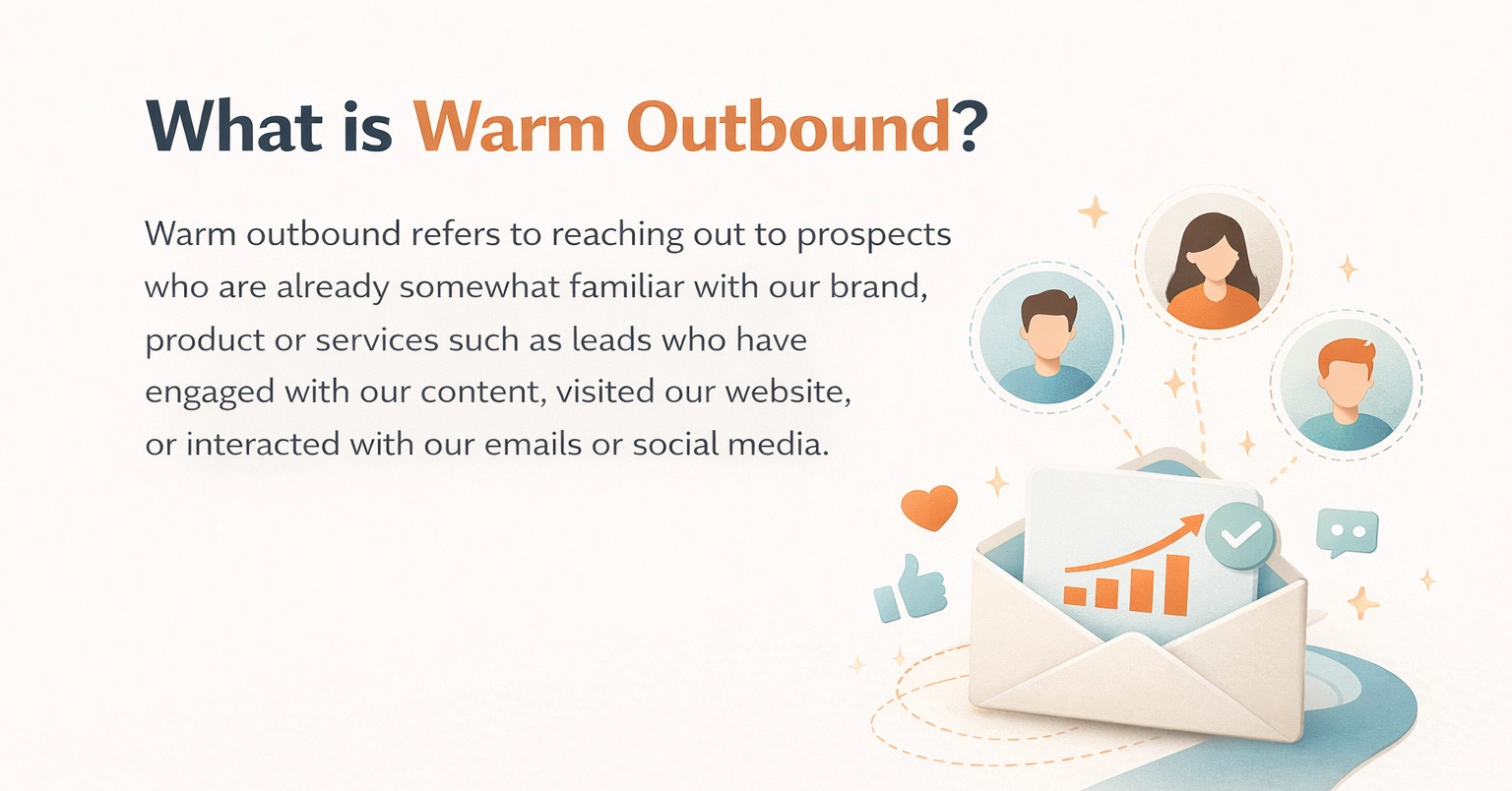
The idea is simple.
When someone visits your website, they’re already exploring a solution, they have context, they know what you do, they’re just not ready to raise their hand yet.
Warm outbound is about reaching out to those people while that interest is still fresh, rather than waiting for them to come back on their own.
It’s not cold outreach. It’s acting on existing demand.
Building the First Version

I started small.
The initial process was mostly manual - identifying website drop-offs, enriching them with relevant data and filtering for Ideal Customer Profile fit before reaching out via email.
Even at a small scale, the results were encouraging. People responded. Conversations started. That’s when it became clear this wasn’t just an experiment, there was a real opportunity to build a channel here.
But to make this work consistently, I needed to move beyond one-off efforts.
The focus shifted to building something that was:
Repeatable
Scalable
Predictable
Turning It into a Workflow
Manually identifying, enriching and reaching out to every lead wasn’t sustainable. So we built automated workflows using tools like Clay and n8n to handle the entire process end-to-end.
Here’s how the four-step system works and how you can replicate it:
1. Capture - Rather than tracking visitors across every page on our website, we narrowed our focus to high-intent pages only. This kept our pipeline defined and ensured we were only acting on companies who were genuinely exploring a solution, captured with the help of AI-powered visitor identification tools.
These tools work by matching anonymous website sessions to company data, surfacing which businesses are actively browsing your site even when no form is filled.
2. Enrich & Filter - Once we know which companies were browsing, we enrich that data into actual business contacts but only for people who match our Ideal Customer Profile.
💡 Before any outreach, leads are also run against a suppression list to automatically exclude existing customers and active opportunities. This is a deliberate step: enriching and filtering selectively means we’re not wasting credits on irrelevant contacts or embarrassing ourselves by reaching out to someone we’re already in conversation with.
3. Segment - Those filtered contacts are then segmented based on context and intent - job title, company size and the specific pages they visited. This ensures each person is routed to the most relevant campaign rather than receiving a generic message that won’t resonate.
4. Trigger - Leads then flow into targeted email campaigns, each matched to a specific segment and use case. The outreach feels personal because it’s built on actual intent, not guesswork.
In simple terms, the system worked like this:
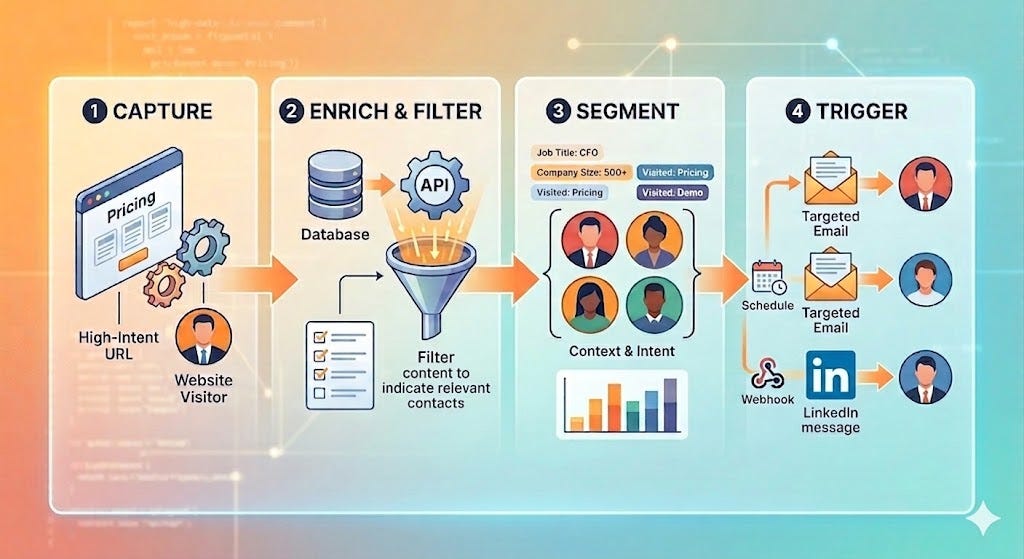
In short: Capture → Enrich & Filter → Segment → Trigger outreach. That four-step system is what moved warm outbound from experiment to scalable channel.
Where We Are Today
Today, warm outbound generates over 100 demo requests per quarter, consistently.
It works alongside our existing paid and organic channels, helping capture demand that would otherwise be lost entirely.
Instead of relying only on form fills, we’re able to engage with potential buyers earlier in their journey, while intent is still fresh.
And this is still early. There’s significant room to scale further.
What’s Next - And What You Should Try
I’m continuing to build on this foundation.

The focus now is on increasing volume, sharpening targeting and expanding outreach beyond email to make the system even more robust.
If you’re running demand gen and you’re not acting on high-intent website traffic, that’s the first place to start. You don’t need a perfect system on day one. Start manual, prove the concept, then automate.
For us, warm outbound is no longer just an experiment.
It’s becoming a core part of how we capture demand.
Not all demand needs to be created. Sometimes it already exists. The real question is whether you’re able to act on it at the right time.
This is amazing thank you for taking us through the process of converting high intent website traffic to valuable leads.